Anessa Sunscreen for Acne-Prone Skin: Which Formula Fits You?
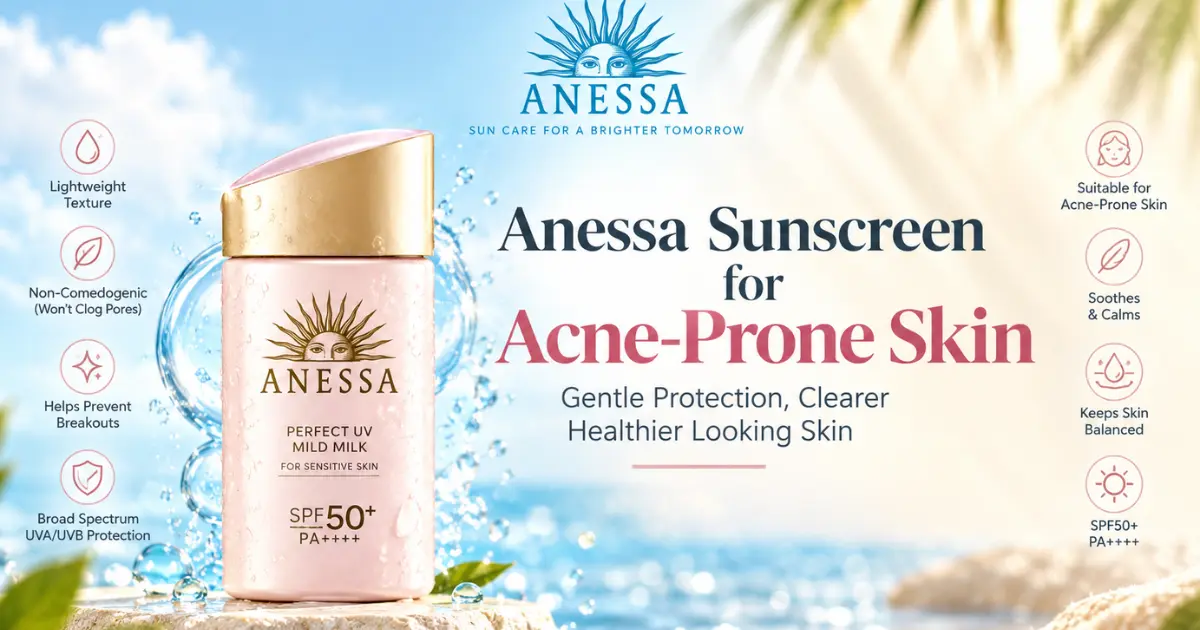
The best pick for Anessa Sunscreen for Acne-Prone Skin is the Perfect UV Sunscreen Mild Milk. People with acne-prone skin often apply sunscreen for protection, but later notice stinging, redness, or new breakouts. Alcohol is one reason this can happen because many Anessa formulas use it to create a light and fast-drying feel.
Mild Milk leaves out alcohol and added fragrance while still providing SPF 50+ PA++++ protection. It also uses zinc oxide as a mineral UV filter. The formula can handle sweat and water, which makes it suitable for daily use without the strong sting that some people may experience with the standard formula.
Ahead, every Anessa variant gets compared on alcohol, fragrance, and zinc oxide content, so picking the right one stops being a guess.
Is Anessa Sunscreen Safe for Acne-Prone Skin?
Anessa sunscreens can be safe for acne-prone skin, but it depends on the product you choose and how well you wash it off at the end of the day.
Anessa’s main formulas are made for daily use and water resistance. They are not made specifically for acne-prone skin. Most standard formulas contain alcohol and fragrance, which may sting or irritate sensitive skin. The Mild range is a gentler option for this reason.
Milk and Gel contain alcohol and fragrance.
Mild Milk and Mineral UV Mild Gel are gentler options.
The main formulas use a combination of mineral and chemical UV filters.
The Milk and Gel lines provide SPF 50+ PA++++ protection.
The texture also matters because heavier formulas may feel uncomfortable on active breakouts.
Example: someone with inflamed breakouts and a compromised barrier tolerates Mild Milk far better than the standard formulas, simply because there’s no alcohol to sting freshly broken skin.
Which Anessa Sunscreen Works Best for Acne-Prone Skin?
Anessa Perfect UV Sunscreen Mild Milk SPF 50+ PA++++ is an excellent choice for acne-prone skin. Its formula is free from alcohol and fragrance, which helps minimize the risk of irritation on sensitive and acne-prone skin. It offers waterproof sun protection, which ensures you do not have to compromise on sun defense despite the gentle formula.
For most individuals with acne-prone skin, it offers the best balance between robust sun protection and minimal stress on the skin barrier.
Does Anessa Sunscreen Clog Pores & Non-Comedogenic?
Anessa sunscreens are less likely to clog pores because they feature a silicone-based formula. However, none of the formulas in the Anessa range make an official non-comedogenic claim.
These formulas utilize a dimethicone base rather than heavy oils. This sits on the skin’s surface and does not clog pores. Most breakouts are not caused by the sunscreen itself, but rather occur when the product is not thoroughly cleansed off and residue remains on the skin.
- None of Anessa’s formulas are officially labeled as non-comedogenic.
- Its silicone-based texture can reduce the risk of clogged pores compared to heavy and oil-based sunscreens.
- Proper double cleansing prevents the buildup of sunscreen residue, which is mistaken for clogged pores.
Does Anessa Sunscreen Contain Alcohol, Fragrance, or Zinc Oxide?
Whether an Anessa Sunscreen contains alcohol, fragrance, or zinc oxide depends entirely on the specific product variant you choose because its formulations vary across standard and sensitive lines. You can check the details in the table below.
| Formula | Alcohol | Fragrance | Zinc Oxide |
|---|---|---|---|
| Perfect UV Sunscreen Skincare Milk | Yes | Yes (light citrus) | Yes (~10%) |
| Perfect UV Sunscreen Mild Milk | No | No | Yes |
| Perfect UV Sunscreen Skincare Gel | Yes | Yes | Yes |
| Mineral UV Sunscreen Mild Gel | No | No (additive-free) | Yes |
How To Apply Anessa Sunscreen: Step-By-Step Guide
You should apply Anessa Sunscreen on acne-prone skin as the final step of your morning skincare routine by shaking the bottle well, using a nickel-sized amount (or two-to-three finger lengths) for your face and neck, and gently patting it in 15 minutes before sun exposure.
- Shake the bottle well for a few seconds before opening the cap.
- Apply an adequate and even layer of sunscreen over your entire face, neck, and ears on clean and dry skin.
- Wait for one to two minutes before applying makeup or any other skincare products.
- Reapply a fresh layer of sunscreen every two to three hours if you are outdoors, sweating, or exposed to direct sunlight.
Is Anessa Sunscreen Mineral or Chemical?
Anessa sunscreen is a hybrid sunscreen. It uses both mineral and chemical UV filters instead of being fully mineral or fully chemical. The Skincare Milk and Mild Milk contain mineral filters such as zinc oxide and titanium dioxide. They also use chemical filters such as octocrylene, ethylhexyl salicylate, and Tinosorb S.
These filters work together to protect the skin from both UVA and UVB rays. The Skincare Milk contains about 10% zinc oxide, which is one of the highest amounts in the Anessa range. Titanium dioxide also absorbs UV rays to help protect the skin. This combination gives Anessa a lightweight feel that is more similar to chemical sunscreens. At the same time, it includes mineral filters that can be useful for people with sensitive or acne-prone skin.
FAQs
Conclusion
The best Anessa sunscreen for acne-prone skin is the Perfect UV Sunscreen Mild Milk. It is made without alcohol, fragrance, or added colorants. It is a good starting choice for easily irritated skin. The Skincare Milk and Gel may suit oily or combination skin better. Choosing the right formula is only one part of good skincare. Double cleansing and proper layering also matter. Use the right sunscreen and apply it correctly. This makes daily SPF easier and more comfortable.